



Reported by Greg Zsidisin
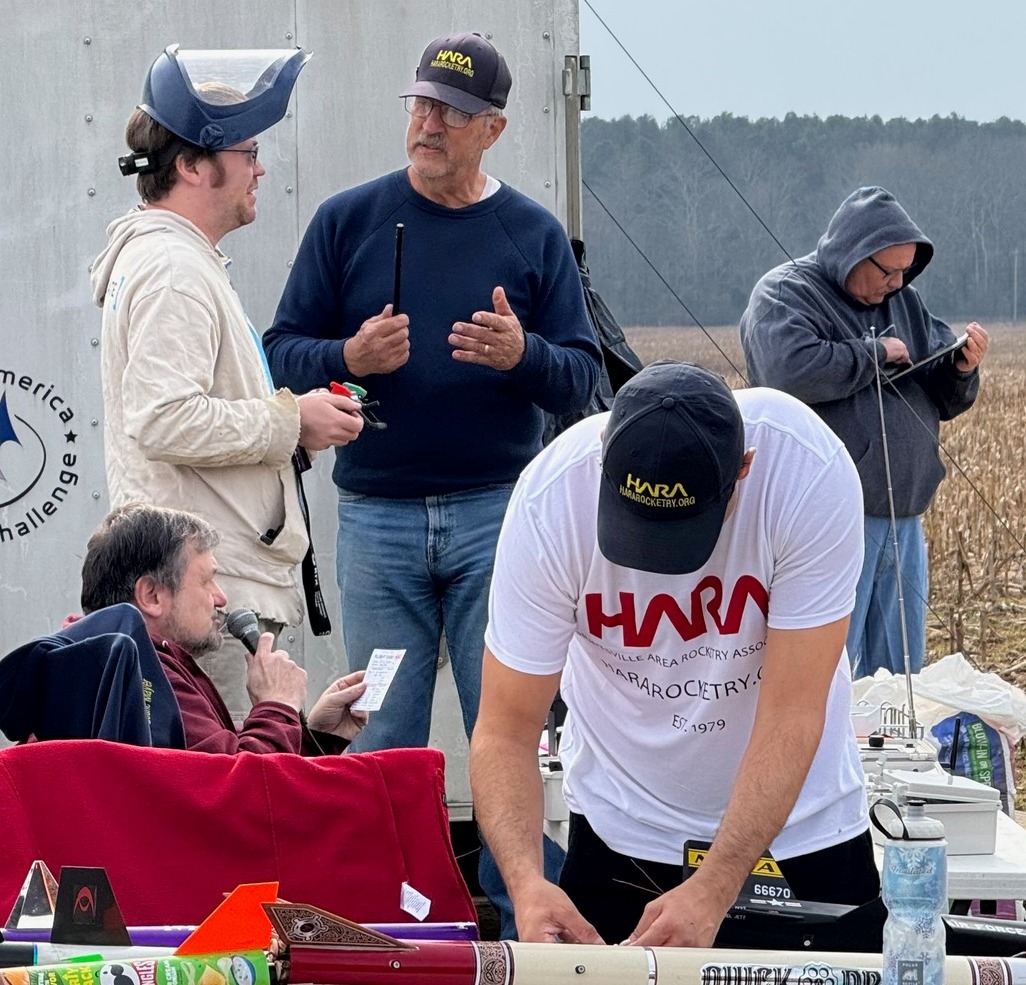
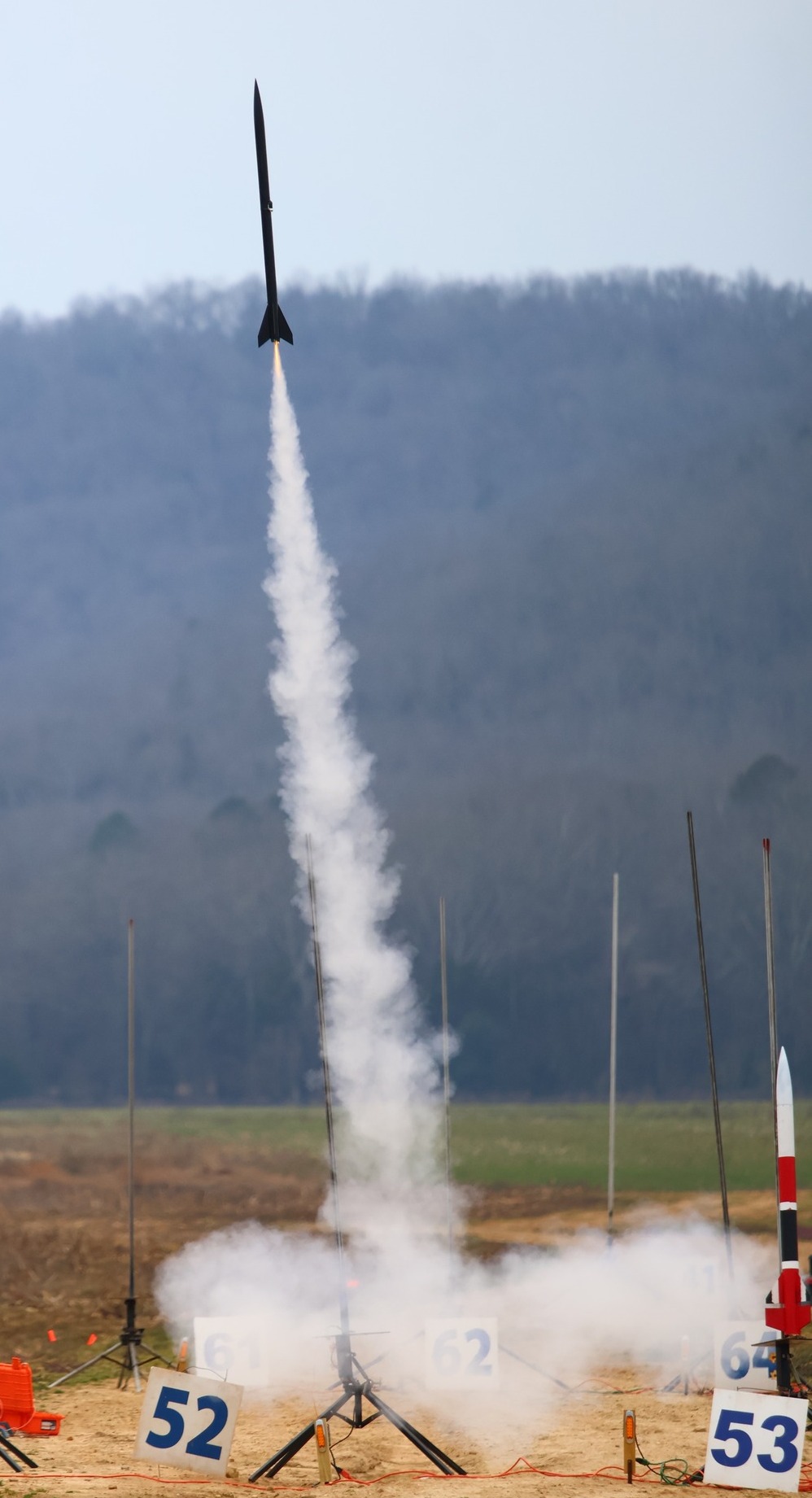
February is not usually a kind weather month for HARA. All too often, we eye the forecasts with increasing pessimism before canceling, as we did in January. But Valentine’s Day 2026 showed us some real love: better than usual conditions and a healthy crowd turnout allowing about sixty launches. The cloud cover proved to be sufficiently high and intermittent to allow all flights, some reaching around 6,000 feet. The morning was warm and almost wind-free, although it got chillier, and winds picked up at altitude later in the day. We were also fortunate to have an onsite vendor, New Century Rocketry.
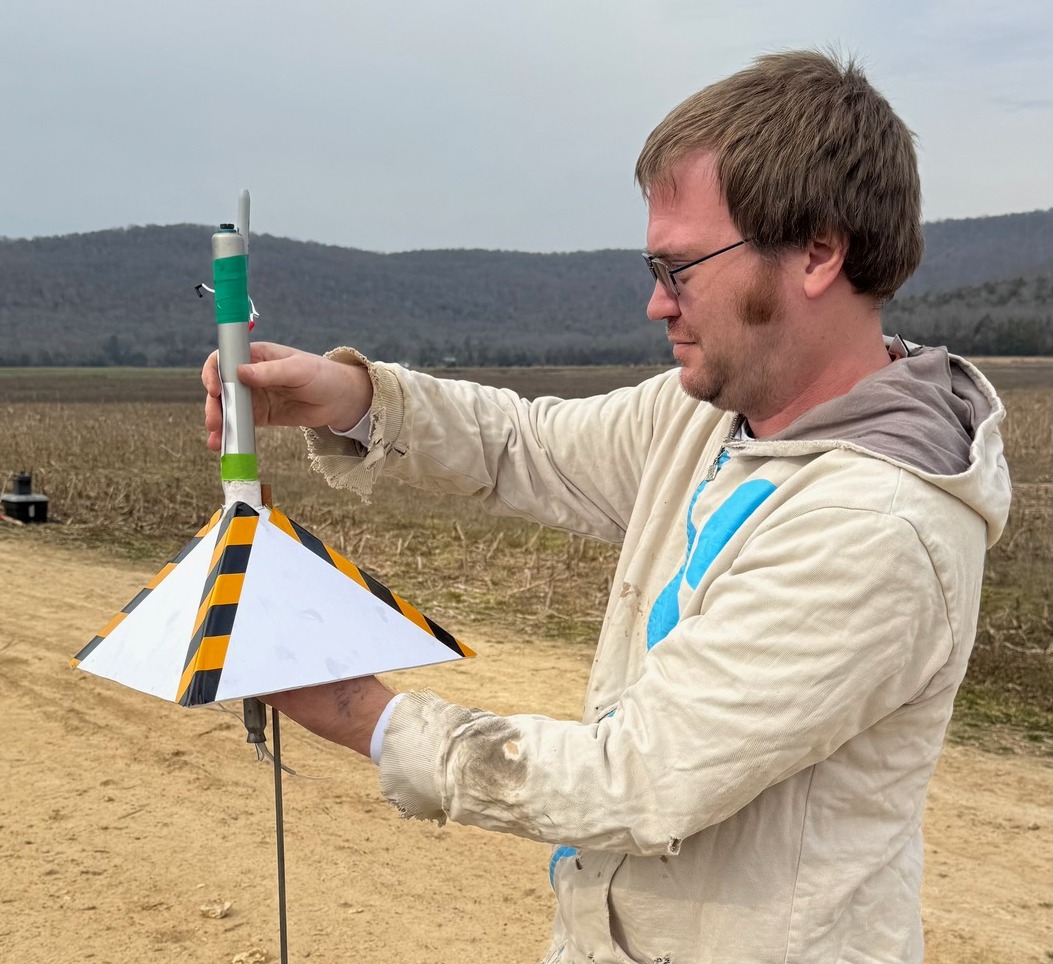
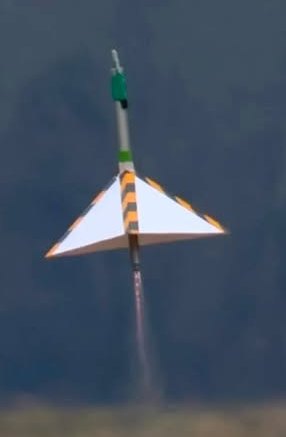
This launch was “especially special” because it was the first in which we flew liquid rocket motors under Tripoli Rocketry Association rules. Well, one liquid motor to be exact. Patrick Morrison, our local liquids lover, flew a small liquid motor three times, with the first being a “miss” due to a nitrous oxide leak, followed by two stronger flights. Although this was epic in its own way, the flights were intentionally modest. Patrick rated his motor as a G66 – model rocket class – and he flew it in what he called a “saucer”, a high-drag model that really was a pyramid with a tube and nose cone sticking out of the top. On all three flights, it reached a low altitude and “lawn darted” near the distant pad. Nevertheless, it was a club milestone, and surely the first of many more to come at HARA.
The flights of the day were rather hit-and-miss. There were far fewer kids and not that many low-power rocket flights. Jim Skeen from Chicamauga, Georgia flew many nice and successful model rockets. We also saw two F15 two-stage launches that weathercocked significantly despite the light wind, ending in a crash for one. Club president Doug Aguilar actually lost track of a tiny micro-motor model, although a quick search among shorn corn stalks did turn it up.
There were many Level 1 certification attempt flights, and two for L2. A group from the University of Alabama came out with more than a half-dozen identical models, all flying H100 motors. Unfortunately, they learned the hard way not to fly high and pop large chutes near apogee. All these models drifted far away towards a local road and wooded hills, with only some being successfully recovered after long chases and hunts.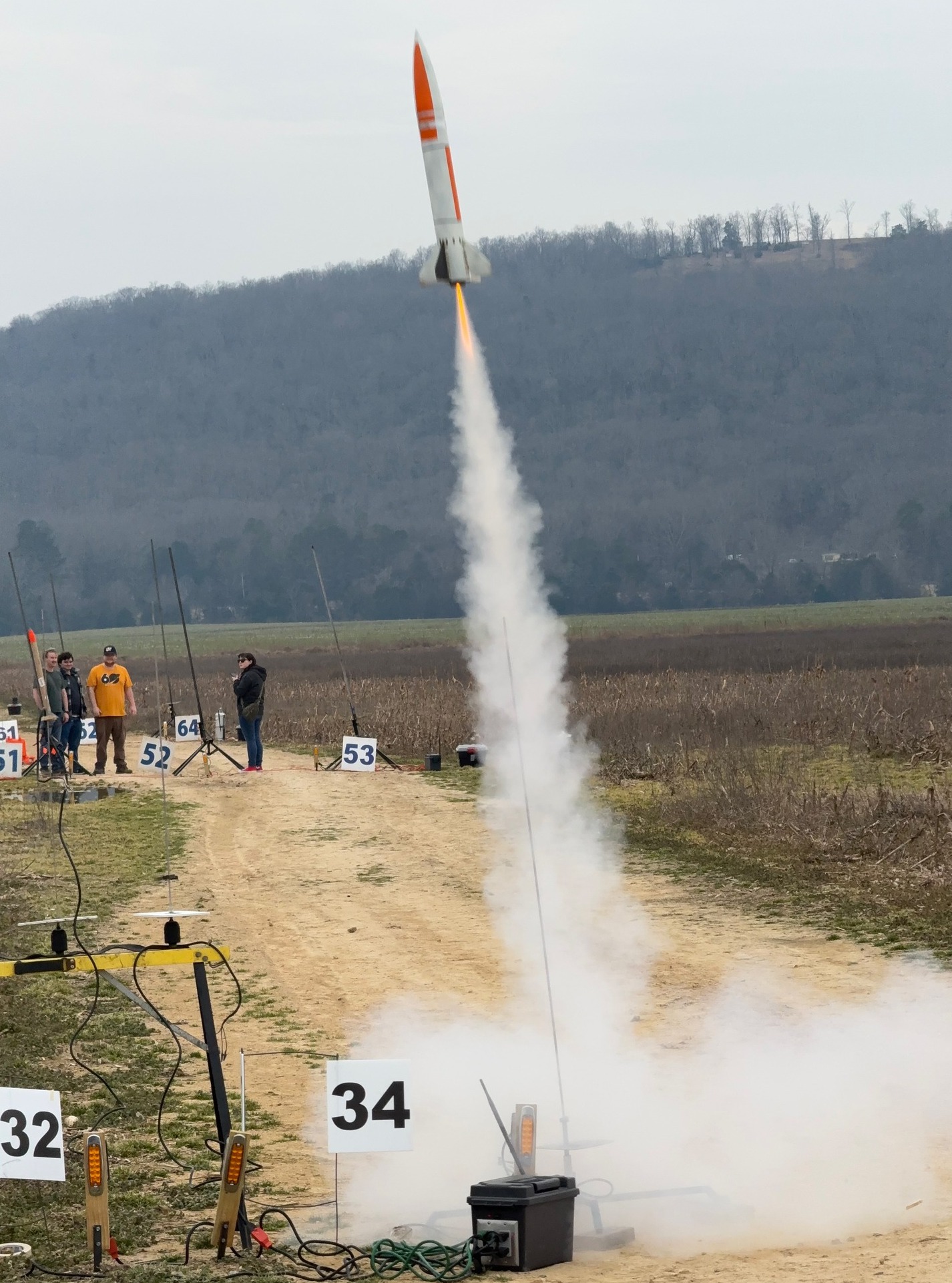
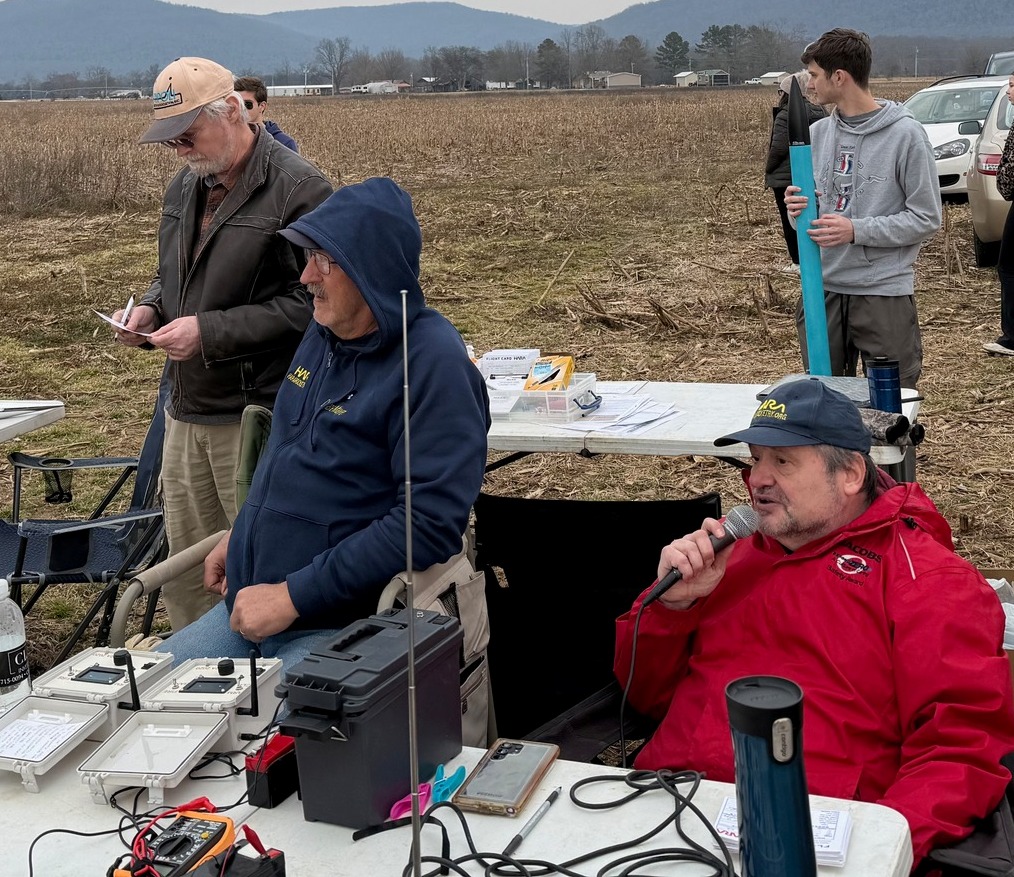
Both L2 certification flights were successful, but also only after long searches, with one flight actually drifting over the local hill into a field next door. Thanks to the help of the Wilsons – father Robert and son Will – Aknil Samiraju got that rocket back and earned his L2, having waited patiently for a launch earlier that day while we assessed the cloud heights.
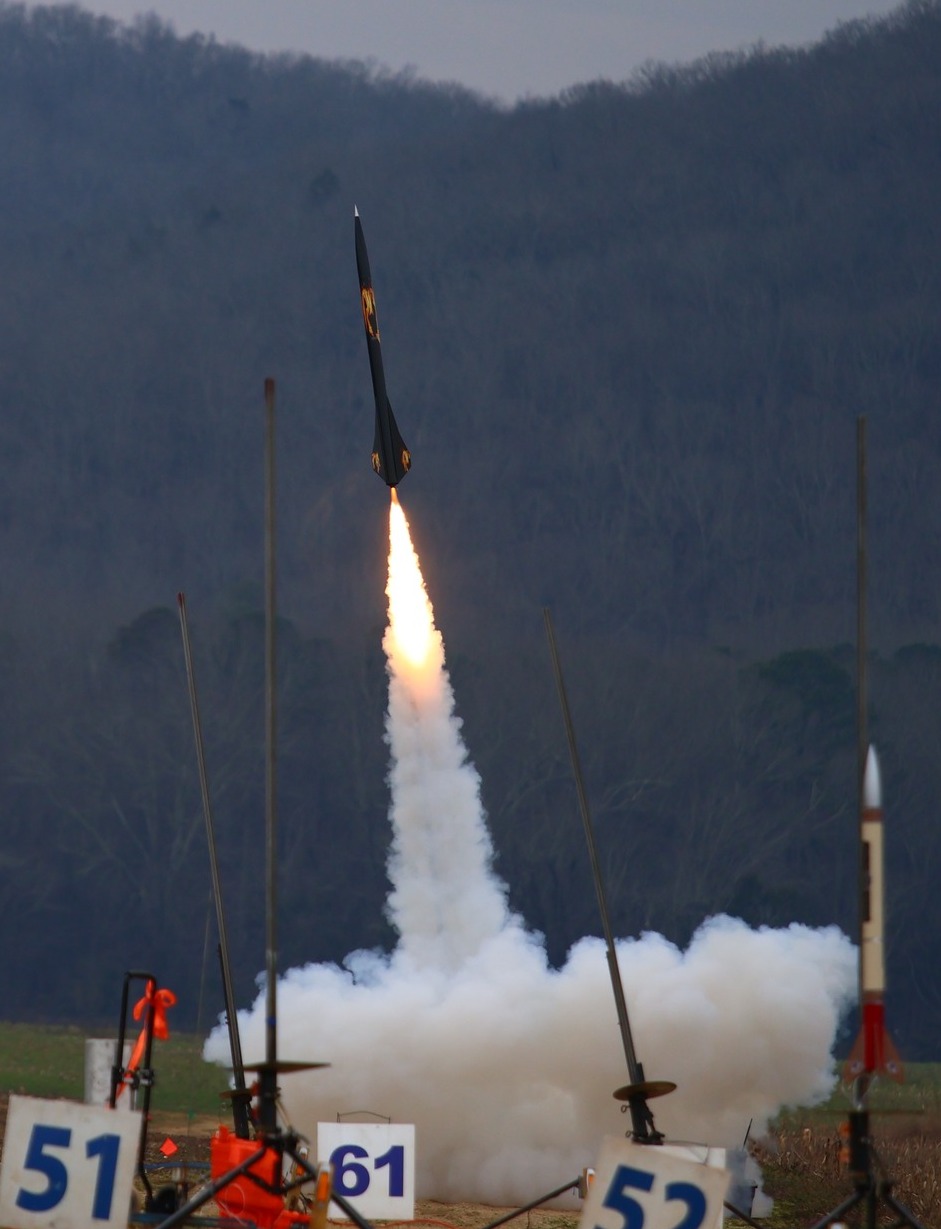
Probably the most exciting – and heartbreaking – mishap of the day was the flight of a large, beautifully finished Bomarc missile model, which took off in a dramatic, corkscrewing arc into the dirt. The owner reported having to dig out the nose cone from a foot of soil.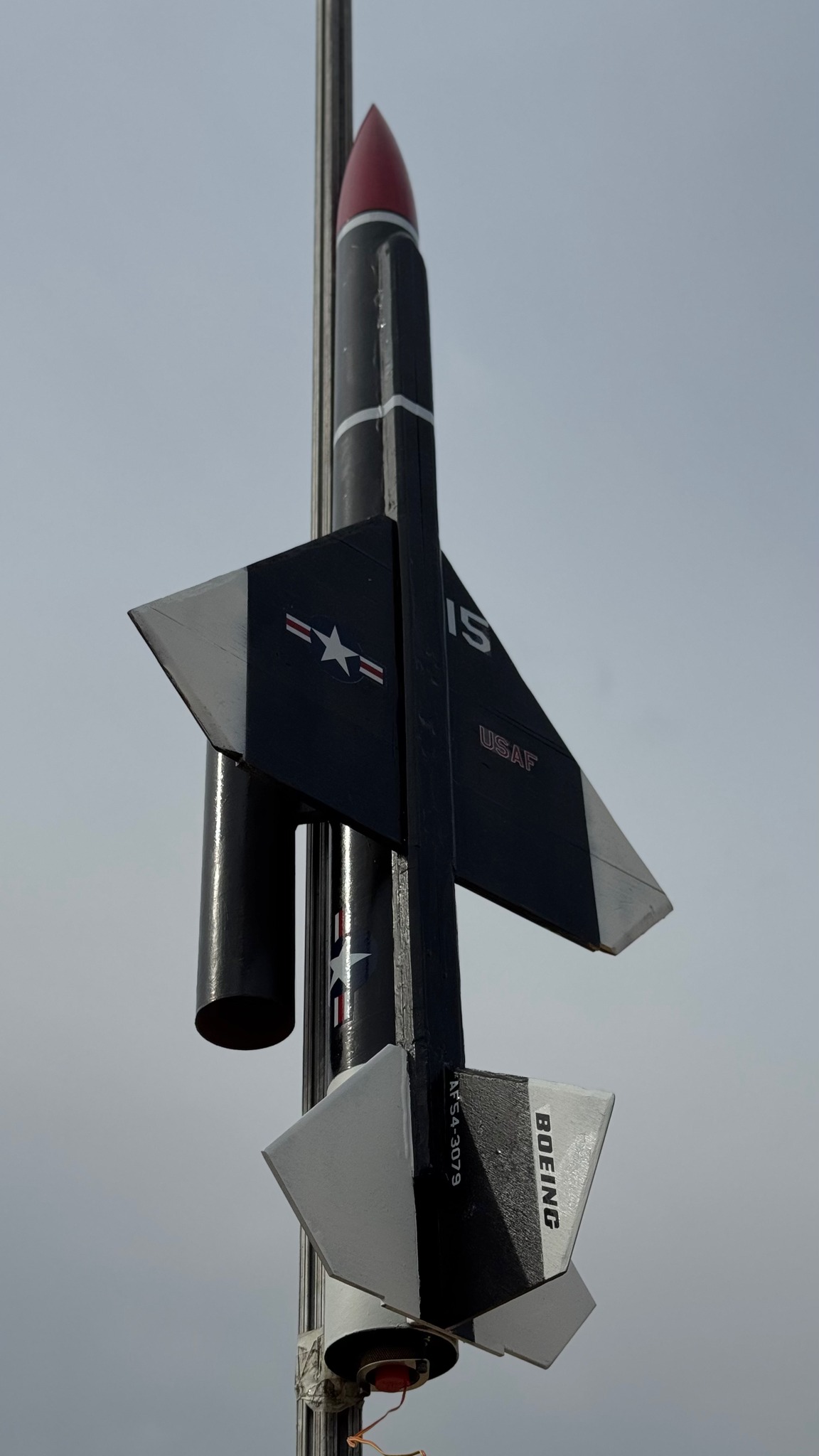
Next month, we hope to fly on both our primary AND backup Saturdays – March 14 and 28. Some takeaways from this launch:
– For L1 attempts, low and slow is your friend, OR be practiced using dual-deploy electronics. Having a main chute out at apogee all but guarantees drift.
– Similarly, tracking electronics are well worth the expense. Not something we had in the “olden days” – you kids don’t know how good you have it!
– If you’ve got a team, have someone “go long” downwind, maybe with walkie-talkies or, of course, mobile phones. (Did I mention how good you kids have it?)
– Very often, hobby rocketry is about dealing with loss, walking long distances, and searching through rough terrain. Not necessarily in that order.
Here’s to being prepared, having great flights, and seeing you under hopefully clear skies next Pi Day.
See many more photos at the HARA Facebook page: Link