Building Rockets, Part 1 – Basic Tools of the Trade

by Bill Cooke

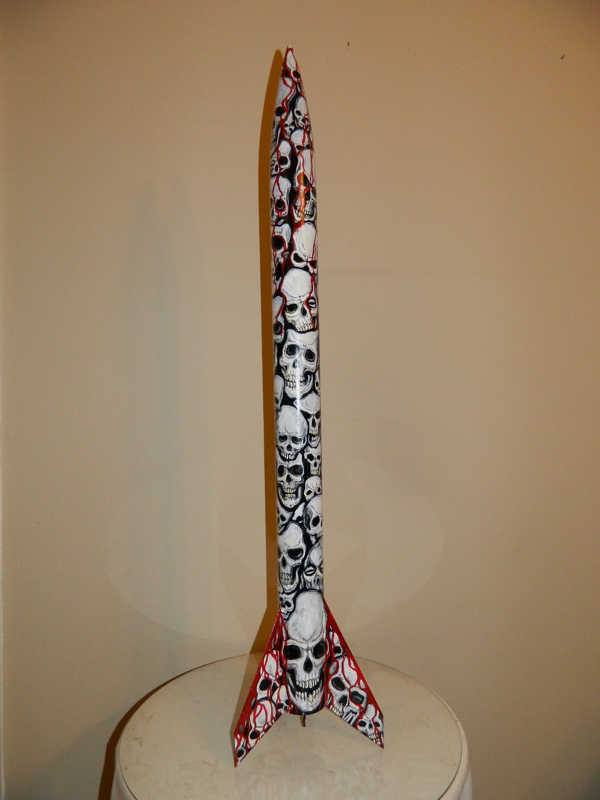
As time has moved along, I have gotten better at building rockets – at least in the sense of finishing and making them look good. I have gone from the classic 10 foot rocket (“rocket looks good from 10 feet away”) to 3 foot rockets, and even the occasional one foot rocket. It is a learning process, accomplished mainly through trail and error and reading the online forums (Ye Olde Rocket Forum) and blogs (Model Rocket Building by Chris Michielssen). However, the joy in turning a cardboard tube and some balsa into a flying, eye-catching rocket is a major high for me, and I’m sure you’ll like it too!
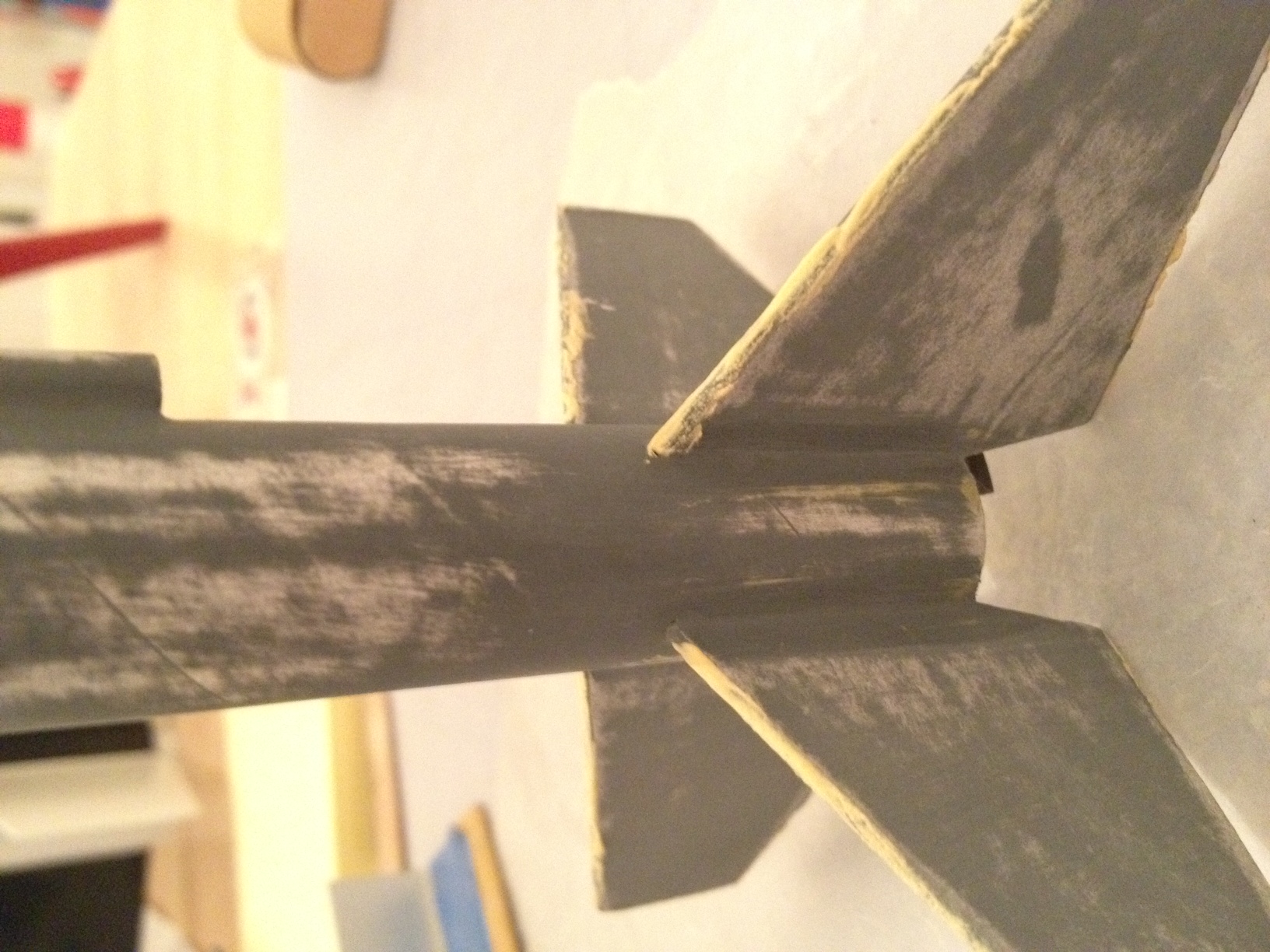
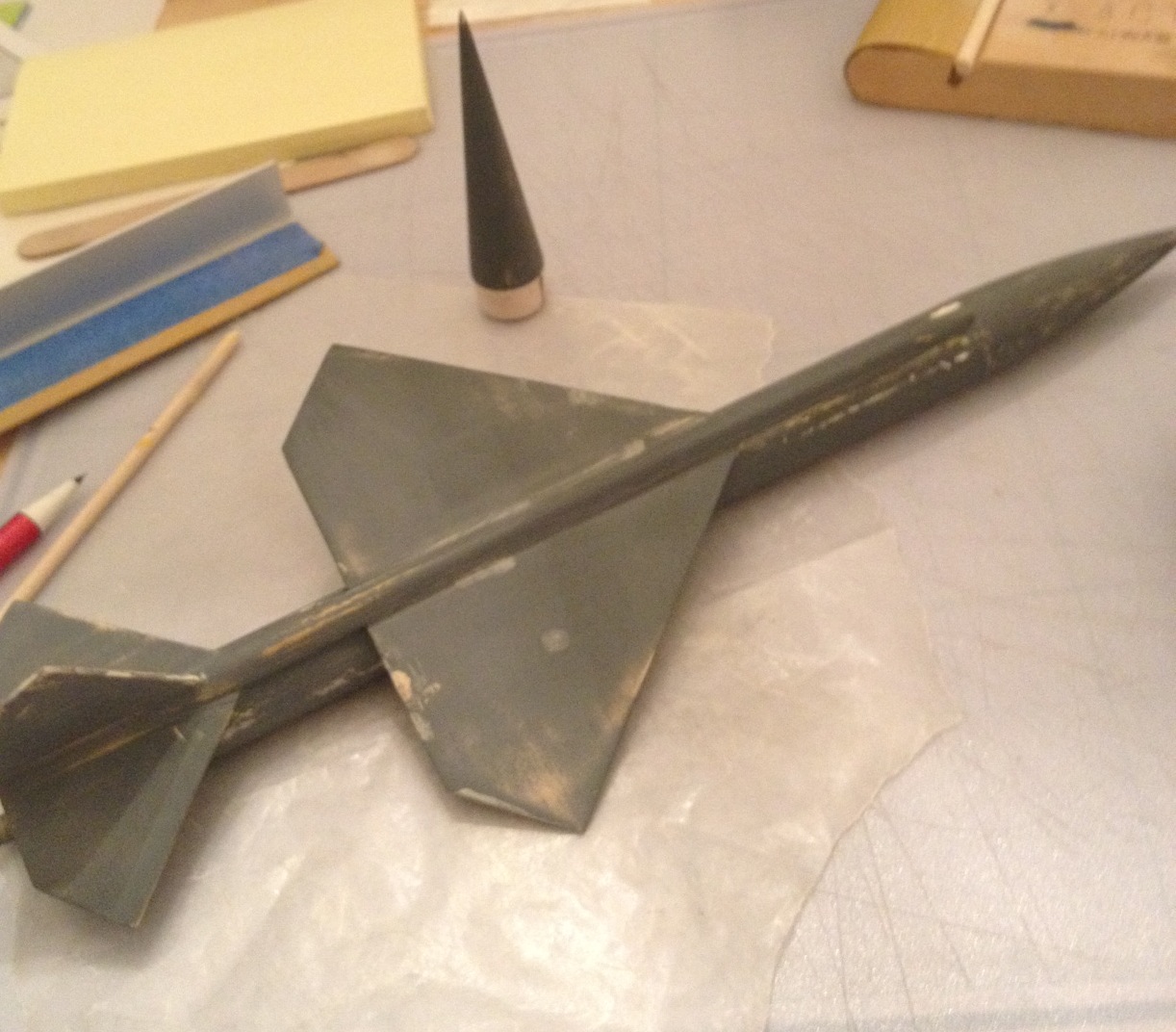
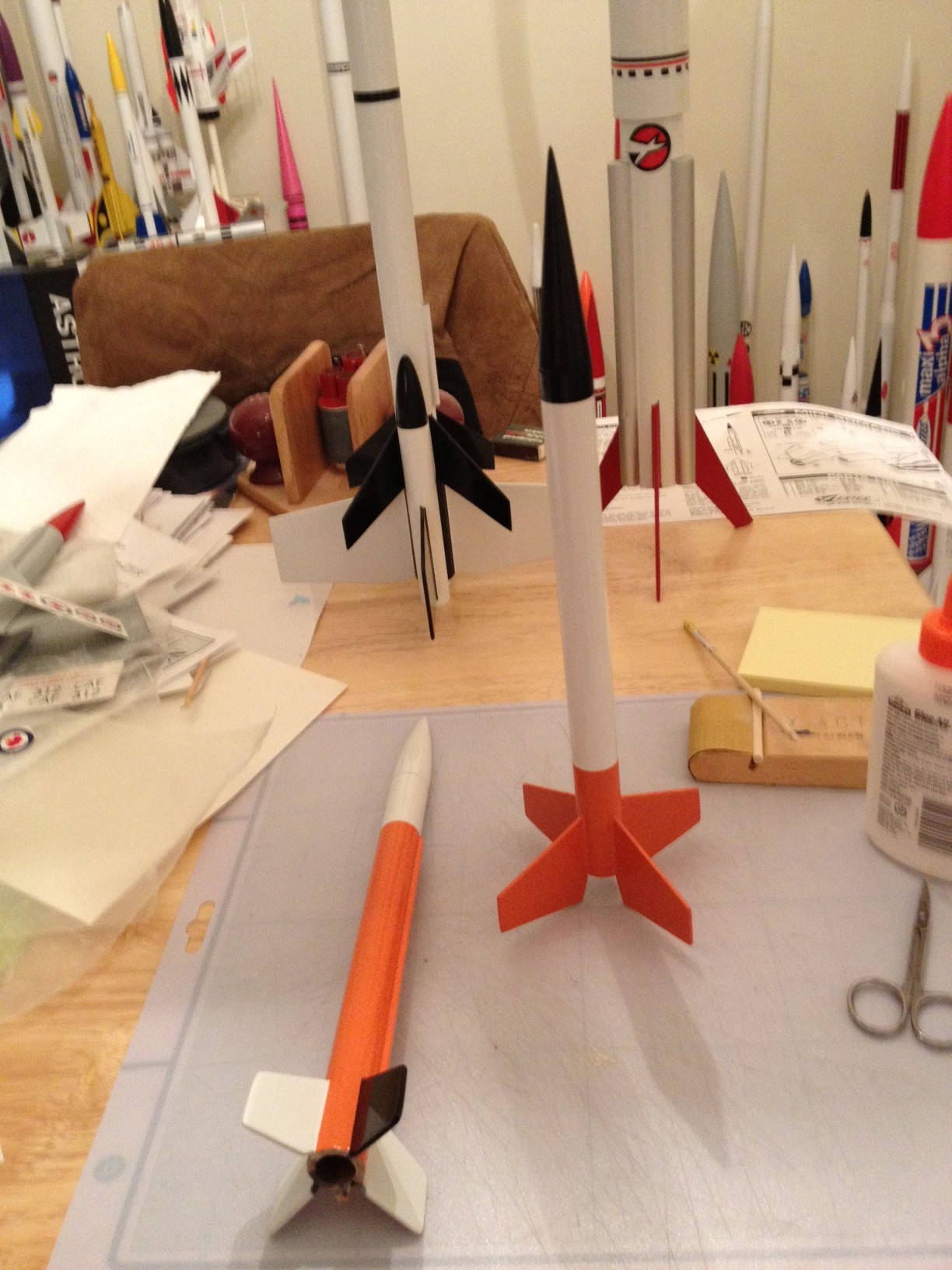
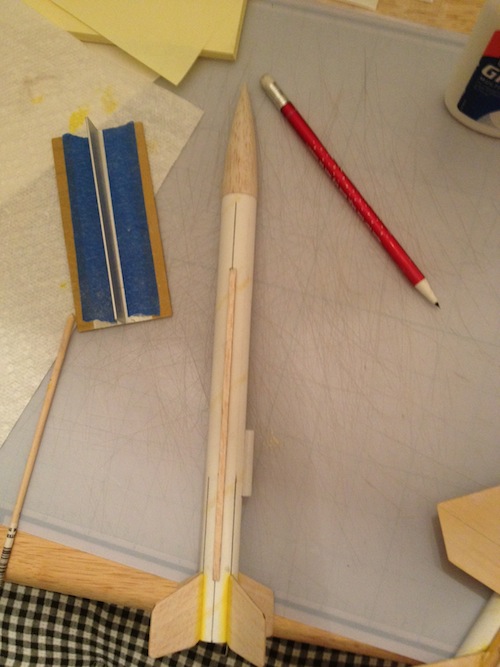
Clone of the Estes Scamp
Before I start discussing tools, there are a couple of things you absolutely need to turn out a decent model:

  • Think about the build – Even when building a kit, you need to think about how you will get to the end product. Does the body tube have spiral seams that need filling? Does it have tube fins, pods, or hard-to-get-at surfaces that may require finishing and painting before they are attached? Do you wish to replace the shock cord mount with another like the “Quest type” to free up more space for the parachute or streamer? The answers to these and other questions will determine how you proceed with the build, so it is good to resolve them up front before you are faced with a gotcha.
  • Have patience – Nothing good ever comes from rushing a model build; in fact, my biggest mistakes have come when trying to hurry a model for a launch or trying to get it finished and painted before a rain front moves in. Allow plenty of time, especially for finishing and painting, which takes far longer than the building for most LPR birds. The sun will return and there is always another launch, so don’t pressure yourself.

Building a rocket requires the right tools. Here are the ones I use, in no particular order:

  • GlueAileen’s Original Tacky Glue is what I use to attach fins; it sets up quickly and provides a strong bond. I use wood glue (Titebond) for fin fillets or wood-to-wood joints.
  • KnifeX Acto #1 knife with #11 fine point blades – is there anything else? Blades are cheap, so ensure yours is sharp by replacing it fairly frequently (How often depends on use and materials you cut).
  • Sandpaper – Various grits, all the way from 150 to 2000. I use 150 to shape plywood and dowels, 220-240 to shape basswood and balsa, 320 to smooth fins and body tubes, and 400 for smoothing the finish (sanding paint base coats). 1000/2000 grit is good for removing paint spots and tiny imperfections – you can get these from hobby shops like RC Hobbies here in town or order it online. You will not find anything finer than 400 grit at Home Depot. Have plenty of sandpaper, because you will be doing a LOT of sanding!
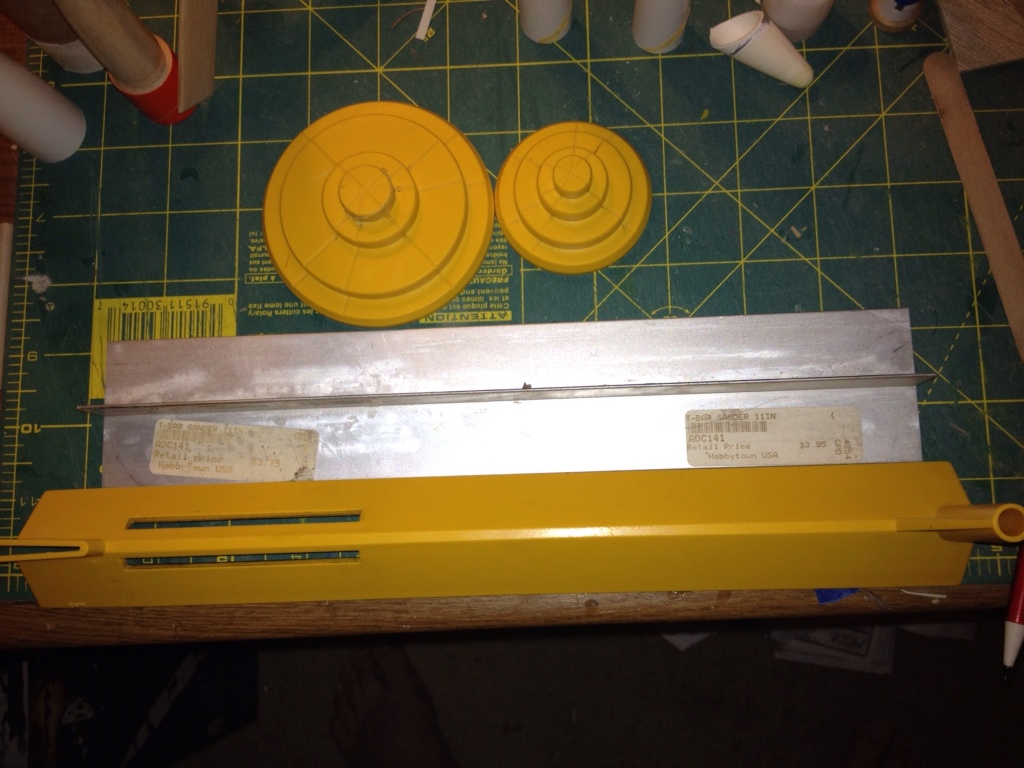
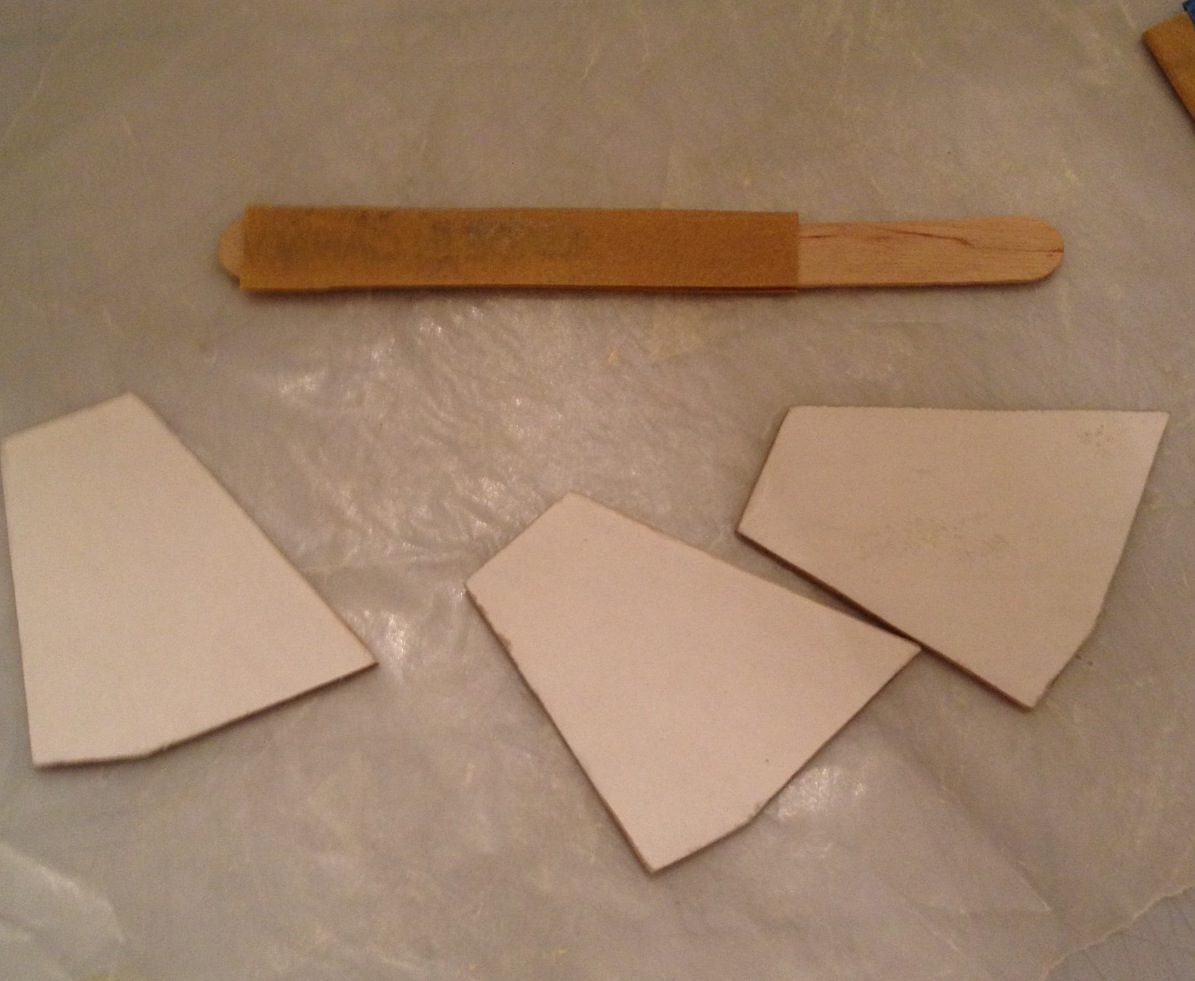
  • Sanding blocks – You CAN sand fins and finishes with just sandpaper in your hand, but a sanding block (small wooden block or t-shaped piece of aluminum) gives you a lot more control, especially when you are trying to put angled edges on that scale model or smooth fin surfaces (fingernails can scratch balsa easily). These are also cheap and available online and at hobby/craft stores; you can make wood ones yourself from scrap plywood if you are so inclined.
  • Tack cloths – Once you have done the actual building, you will need to keep the rocket clean while you add primer and paint, as there is some sanding in between coats. Paper towels and soft rags help to some extent, but I have found that they always leave small particles and junk that cause unsightly bumps in the paint. A tack cloth is a sticky piece of cheese cloth that will actually grab the dust and gunk as you wipe the rocket down (see pic at bottom). Available online or at Hobby Lobby or Michaels for a couple of bucks each, they are indispensable for getting a good finish!
  • Rulers – Absolutely, positively essential! I have a couple of plastic ones that I use to make measurements, and a thin metal ruler I use as a knife guide to cut fins, patterns, and decals/markings. Only way I am able to cut a straight line!

These are the basics – I have left out very obvious things like pencils and sharpies used to mark alignment lines, etc. However, a good build requires more than just the basics, especially in marking alignment lines, cutting body tubes, and filling seams and other imperfections. I’ll cover those in part 2…

Third TARC Regional May Produce Finalist

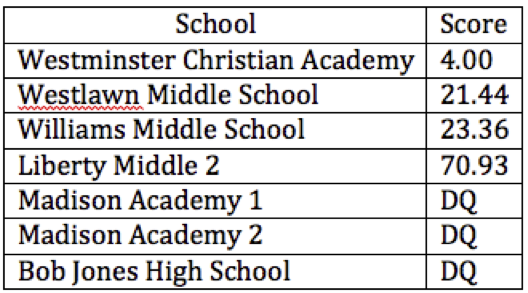
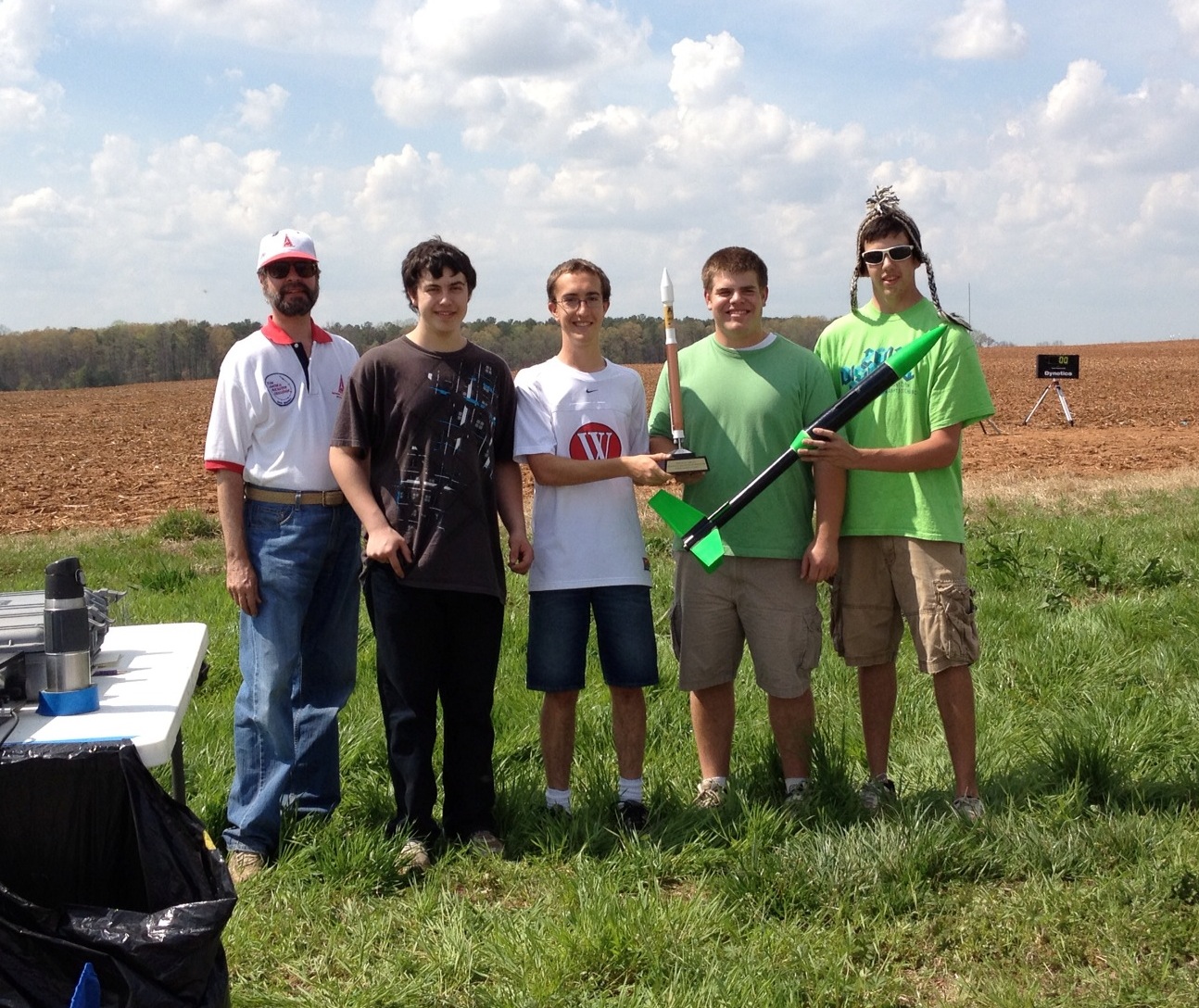
The winner of the third annual TARC regional qualification launch hosted by HARA at Bragg Farm 3/19/11 may have a score good enough to take them to the nationals. Madison Academy got into the single digits with a ‘9,’ which usually is in the top one hundred and means a trip to Manassas.

Madison Academy had two teams this year who were both making their attempts in this event. Team two got on the board first with a ’61’, and then team one went a bit high and broke their egg. Ridgeland HS from Georgia returned to fly with HARA this year to hit a ’23’ on their first attempt, but dropped to a ’39’ on the second try. Westlawn MS qualified for third place with a ’41’. All teams made numerous practice flights to keep the sky busy, with one team scoring an unofficial ‘6’ that didn’t count. MA’s team two got their ‘9’ on their second qual attempt. All egg capsules had to be recovered on a 15″ diameter parachute. The target altitude this year was 750′ but those flights that hit the 40-45 second duration window were rewarded with a zero time deduction.

Results of 2011 TARC Regional Qualification LaunchesHuntsville 2011 TARC Regional Results

Tanner HS attended and made one practice flight.

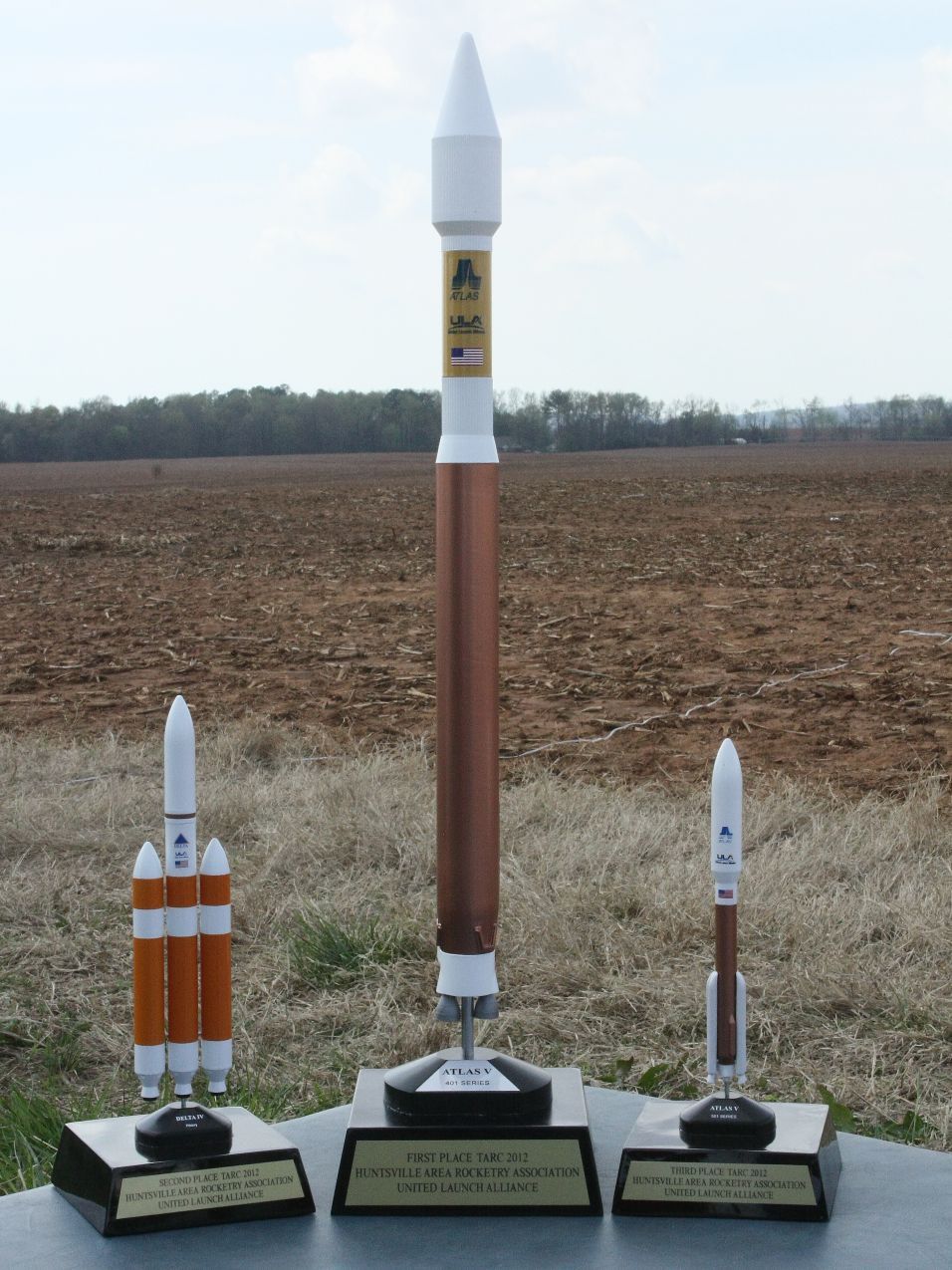
Plaques were awarded to the top three places. Over fifty people were on hand to watch the launches in the best weather the regional event has had since it began two years ago. Vince Huegele and Bill Cooke provided the local officiating to qualify the flights as well as mentoring the teams throughout the year. If a team’s score is one of the top 100 best in the country, the team is invited on April 8 to compete for a share of the $60,000 prize package in a national fly-off in Virginia on May 14.

HARA has supported TARC since it began in 2003 and has coached five teams into the finals.

Lessons learned from the 2009 TARC season

The ruins of my 2009 TARC rocketThe 2009 TARC season is essentially over; all that’s left is the Nationals at Manassas on May 16, where once again Stone Middle will represent the state of Alabama. It’s a triumph for their team, who made good use of a simple, effective strategy.

One much more effective than the one I employed this year. Being more complex, it led to the eventual destruction of my rocket and reminded this aging geezer of the value of the K.I.S.S. (Keep It Simple, Stupid) principle.

My approach this season was to achieve the target altitude by varying the total impulse of the rocket, holding weight roughly constant. So I constructed a rocket capable of handling up to a 5 motor cluster; by adding or taking away motors I figured it would make 750’ feet easily. Indeed, if you add up the impulses of the motors used in each flight, and plot this with peak altitude as measured by the altimeter, you get a graph like this:

bills_strategy

However, 5 motors are awfully hard to light simultaneously with Estes igniters and a clip whip. 4 I could do consistently, but 5… Well, let’s just say when the core E9 doesn’t ignite, it’s going to be a bad day. However, the plot above does show that I would have come very near my mark had I gotten the E9, 2 C6’s, and 2 A10’s to pull together on lift off. This provides some small consolation as I stare at the pieces of my rocket sticking out of the garbage can.

Stone’s easier strategy – the one that got them to Nationals this year – was to reach 750 feet by varying the weight of the rocket and holding the impulse constant, which they achieved by using the same motor type from the same production run. After each flight, they plotted the altitude of of the rocket as recorded by the altimeter versus its lift off weight, measured just before flight with a postal scale. The graph looked something like:

stone_middle_strategy

Once they had made 3 or 4 flights, they had enough points to easily determine the amount of weight needed to reach the target altitude. Like I said, an effective strategy, and more importantly, a simple one. The K.I.S.S. principle has been vindicated once more.

So what are TARC 2009’s lessons? In my opinion, there are 6:

  1. Consistently attend the TARC classes offered by HARA.
  2. Use good construction techniques on your rocket; for example, avoid using super glue or tape to attach fins or launch lugs.
  3. Using the K.I.S.S. principle, come up with a strategy for achieving the contest goals. I focussed on the altitude here, but you also need one for the duration mark.
  4. Make several practice flights, enough to “dial in” the altitude and duration by adjusting some aspect(s) of the rocket.
  5. Don’t wait till the last week or two to start practicing.

And last, but not least…

Stay away from 5 motor clusters!
Bill